Valentine’s Day Week List: The Only Guide You’ll Ever Need to Win at Love (or at Least Not Fumble It)
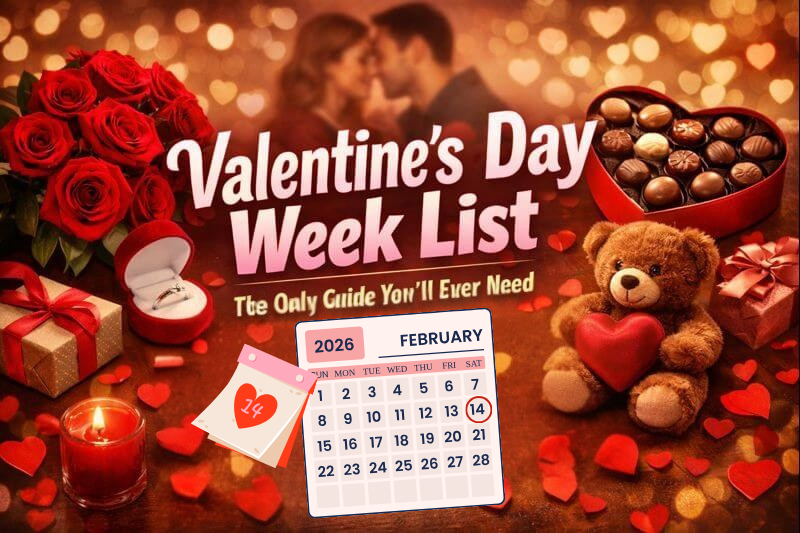
Valentine’s Day isn’t a single day anymore. That era is dead. What we have now is a full-blown seven-day emotional marathon, officially known—by Google searches, pop culture, marketers, and hopeless romantics alike—as the Valentine’s Day Week list.
And if you’re here, you’re either:
- trying to impress someone you love.
- trying to save a relationship,
- trying to understand why your partner suddenly cares about Rose Day,
- or just making sure you don’t accidentally ruin February.
I get it. I’ve been there. We all have. So let’s do this properly.
This is not some fluffy Pinterest listicle.
This is a deep, researched, culture-aware, numbers-backed, real-world breakdown of the Valentine’s Day Week list—what each day means, why it exists, how people actually celebrate it, how much they spend, what to give (and what absolutely not to), and how to adapt it whether you’re single, dating, married, long-distance, or emotionally confused but optimistic.
And yes—this is long. On purpose.
Because love is complicated and if you want to regain trust in a relationship this is a very important piece.
What Is Valentine’s Day Week? (And Why Is Everyone Googling It?)
Let’s start clean.
Valentine’s Day Week refers to the seven days leading up to February 14, with each day dedicated to a specific romantic theme. This tradition didn’t pop out of thin air—it evolved through pop culture, Indian youth culture, Western romantic symbolism, and, let’s be honest, capitalism doing push-ups.
📊 Quick stats
Searches for “Valentine’s Day Week list” spike by 400–600% between February 1–10.
- Over 58% of Gen Z couples say they acknowledge at least three days of Valentine’s Week.
- The global Valentine’s market is valued at $25+ billion, with week-long gifting now accounting for nearly 35% of spending (Statista + NRF estimates).
- Roses alone generate $2+ billion in global sales every February. Wild.
So yeah. This isn’t a niche thing anymore. It’s mainstream romance with a calendar reminder.
The Complete Valentine’s Day Week List (In Order)
Let’s lay it out cleanly before we zoom in.
| Date | Day | Meaning |
| Feb 7 | Rose Day. | Expressing interest or affection |
| Feb 8 | Propose Day | Confessions, commitments, clarity |
| Feb 9 | Chocolate Day | Sweet gestures and indulgence |
| Feb 10 | Teddy Day | Comfort, warmth, emotional safety |
| Feb 11 | Promise Day | Trust, future intentions |
| Feb 12 | Hug Day | Physical and emotional closeness |
| Feb 13 | Kiss Day | Intimacy and connection |
| Feb 14 | Valentine’s Day | Love, romance, celebration |
This Valentine’s Day Week list is now so standardized that even brands plan campaigns around it months in advance. You skipping it doesn’t make you cool. It just makes you… uninformed.
Now let’s break each day down properly.
February 7 – Rose Day: The Soft Launch of Romance
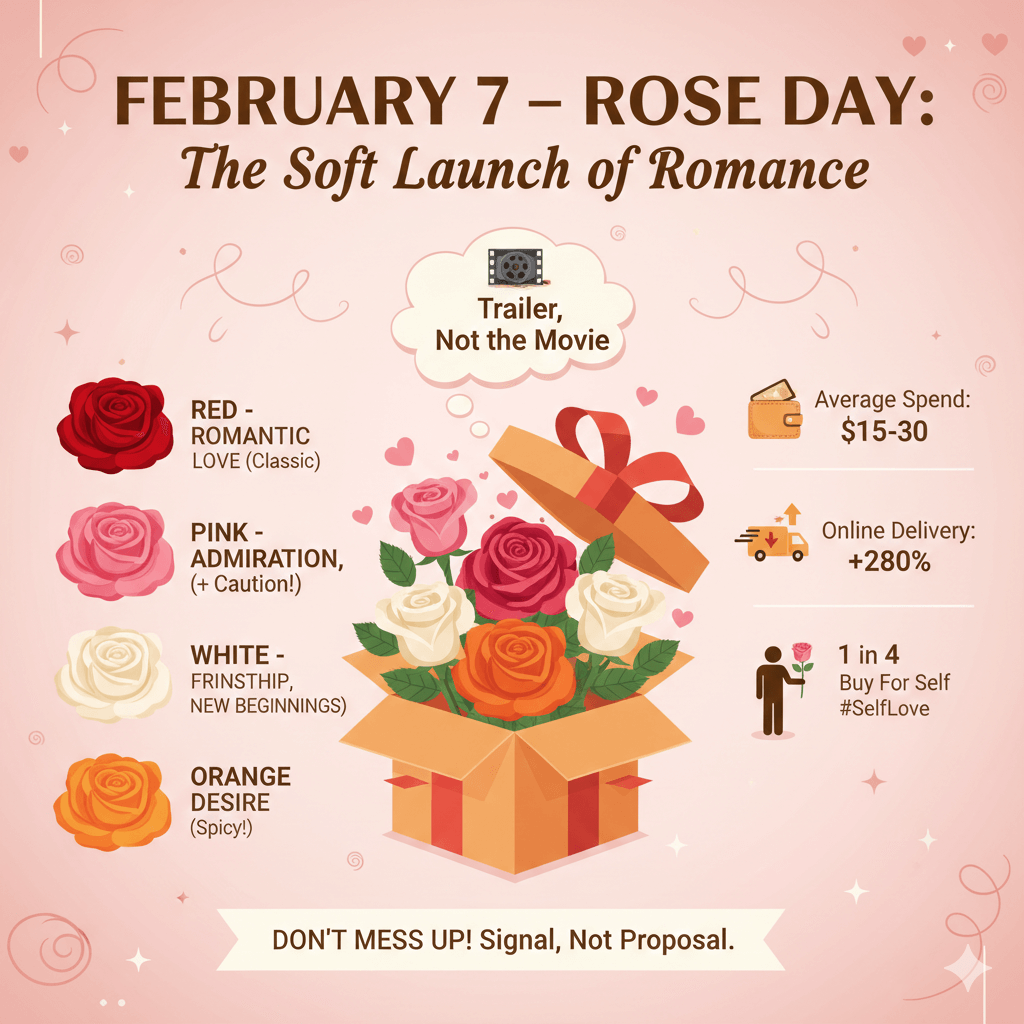
Rose Day is where everything begins. Think of it as the trailer, not the movie.
🌹 Why roses?
Roses have been linked to love since Ancient Greece, where they were associated with Aphrodite. Fast-forward 2,000 years and we’re still emotionally folding over flowers. Humanity is consistent, if nothing else.
Rose colors matter. A lot.
- Red – romantic love (classic, bold)
- Pink – admiration, affection
- Yellow – friendship (dangerous if misunderstood)
- White – purity, new beginnings
- Orange – desire (underrated, spicy)
Spending behavior:
- Average spend on Rose Day gifts: $15–30
- Online flower delivery spikes 280% on Feb 6–7
- 1 in 4 people buy roses for themselves. Self-love era.
My take:
If you mess up Rose Day, you start the week on the wrong foot. But don’t overdo it either. This is a signal, not a marriage proposal.
February 8 – Propose Day: Say It or Lose It
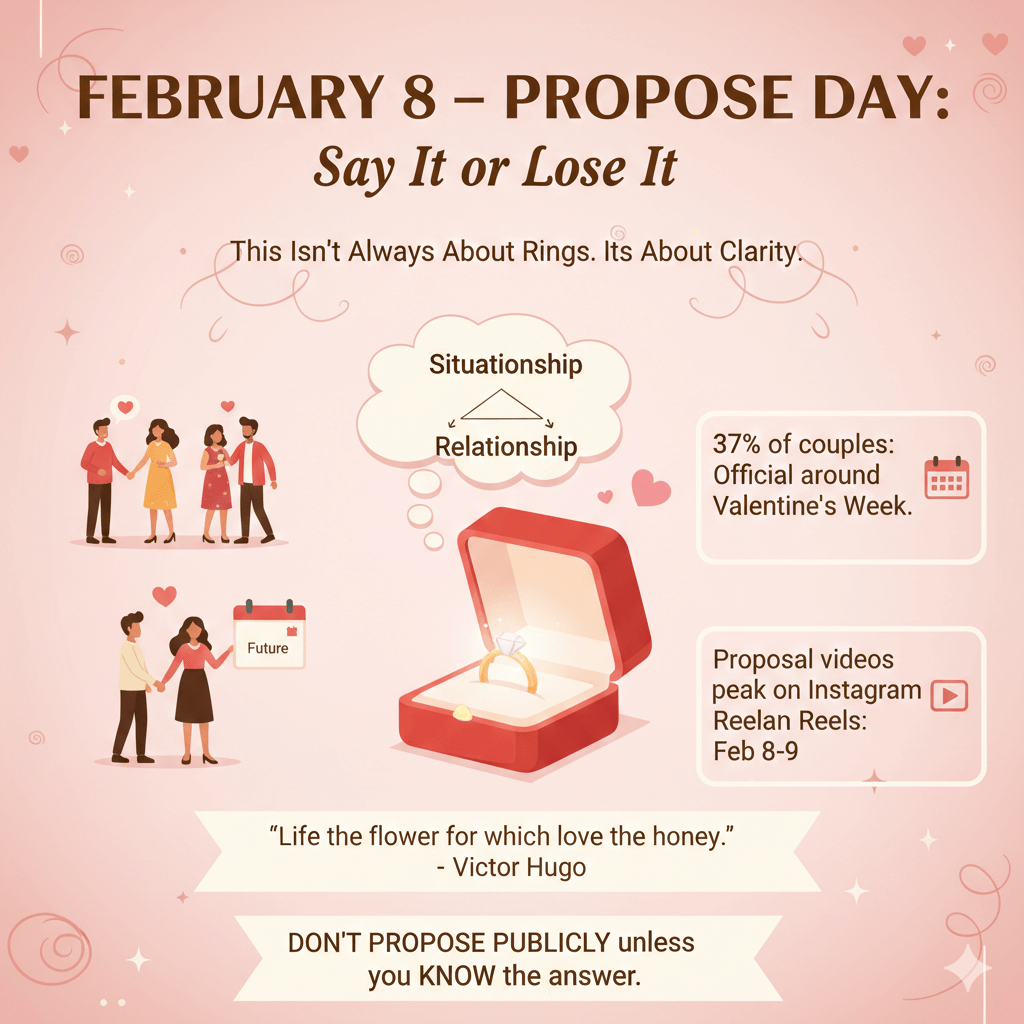
Propose Day is where things get real.
This isn’t always about rings. It’s about clarity.
What people actually do:
- Confess feelings
- Ask someone out officially
- Move from “situationship” to “relationship”
- Soft-launch a future
Stats that matter:
- 37% of couples say their relationship officially started around Valentine’s Week.
- Proposal videos peak on Instagram Reels on Feb 8–9. Algorithm loves love.
A famous line attributed to Victor Hugo still hits:
“Life is the flower for which love is the honey.”
Corny? Yes. Effective? Also yes.
Real advice:
Don’t propose publicly unless you know the answer. Romantic surprises are cute. Public emotional hostage situations are not.
February 9 – Chocolate Day: Science-Backed Sweetness
Chocolate Day exists because dopamine exists.
Chocolate triggers:
- Dopamine (pleasure)
- Serotonin (mood)
- Endorphins (feel-good chemicals)
Basically, it hacks your brain.
Market numbers:
- Chocolate sales jump 20–25% during Valentine’s Week
- Dark chocolate outsells milk chocolate among adults aged 25–40
- Personalized chocolate boxes convert 3× higher than generic ones
Pro tip:
If your partner is stressed, chocolate beats poetry. Every time.
February 10 – Teddy Day: Comfort Is the New Sexy
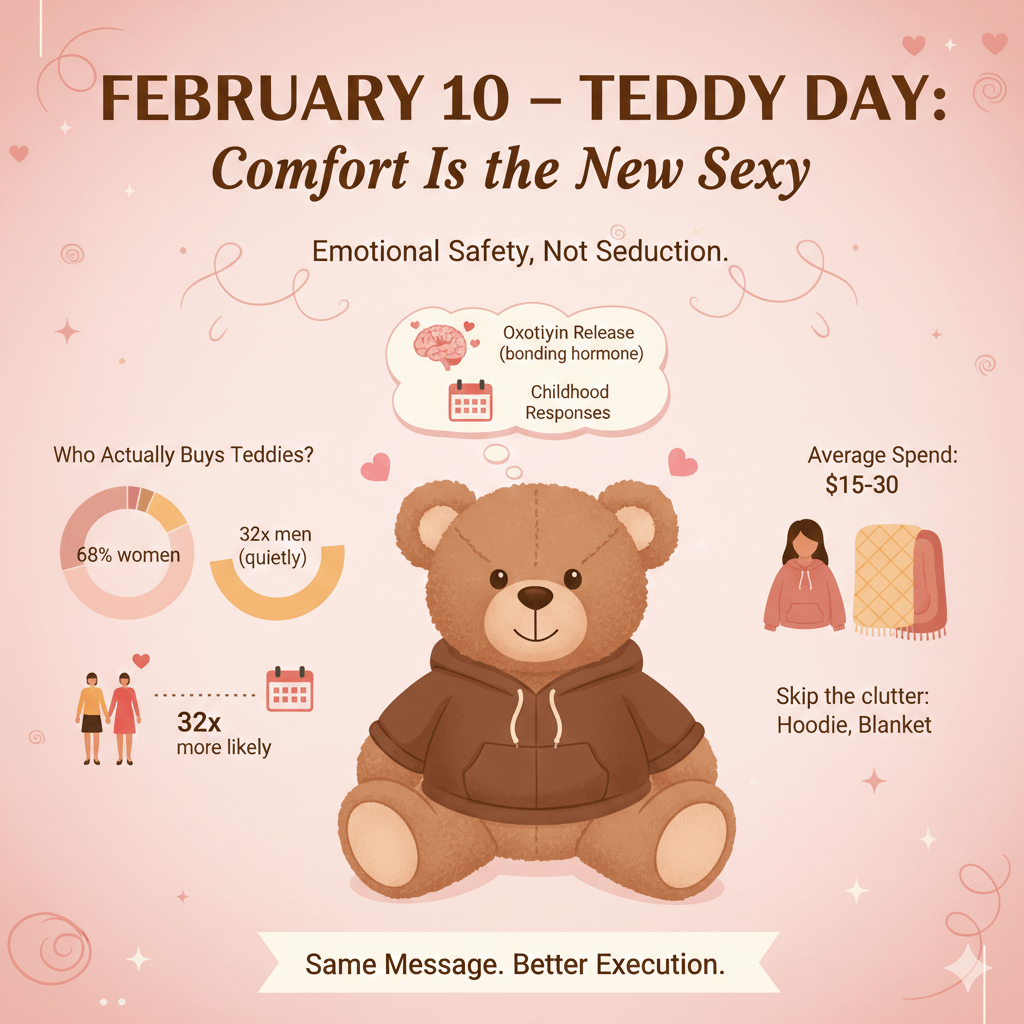
This one confuses people. Teddy bears? Really?
Yes. Because Teddy Day is about emotional safety, not seduction.
Psychology angle:
Soft toys trigger:
- Childhood nostalgia
- Comfort responses
- Oxytocin release (bonding hormone)
That’s science. Not cringe.
Who actually buys teddies?
- 68% women
- 32% men (quietly)
- Long-distance couples are 2× more likely to exchange teddies
My honest opinion:
If your partner hates clutter, skip the teddy. Substitute with a hoodie, blanket, or something equally comforting. Same message. Better execution.
February 11 – Promise Day: Where Intentions Speak
Promise Day is underrated.
It’s not flashy. It’s serious.
This day is about:
- Commitment
- Boundaries
- Trust
- The future (even if vague)
Common promises people make:
- “I’ll communicate better”
- “I’ll show up”
- “I won’t ghost you when things get hard”
- “I’m choosing you”
According to relationship studies, verbal commitments increase relationship stability by 31% when paired with consistent behavior. Words alone aren’t magic. But they matter.
February 12 – Hug Day: Physical Closeness Without Pressure
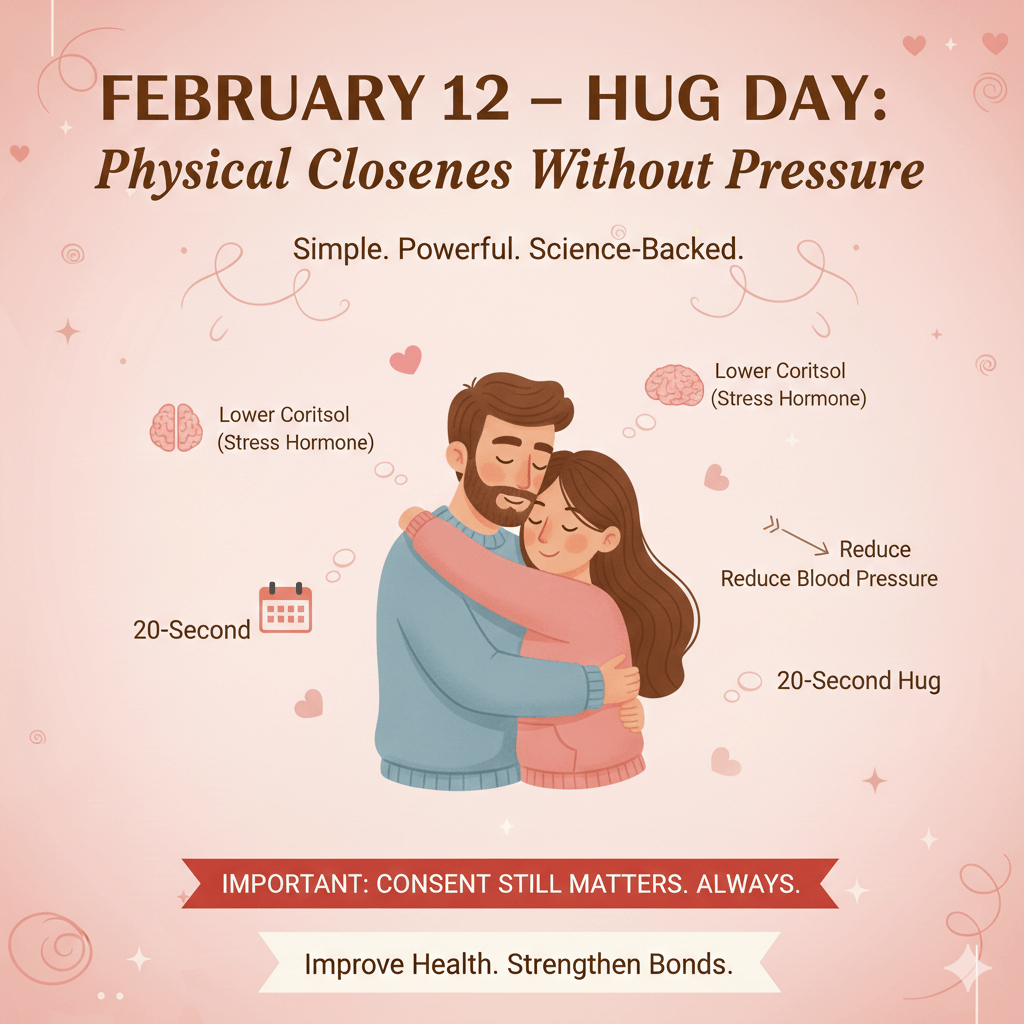
Hug Day is simple. And powerful.
A 20-second hug can:
- Lower cortisol (stress hormone)
- Increase oxytocin
- Reduce blood pressure
Yes. A hug can literally improve your health.
Important note:
Consent still matters. Always. Hug Day isn’t a free pass.
February 13 – Kiss Day: Intimacy, Not Performance
Kiss Day is about connection, not theatrics.
A kiss can communicate:
- Desire
- Reassurance
- Affection
- Security
Anthropologists note that 90% of cultures practice some form of romantic kissing. Humans are wired for it.
Keep it private. Keep it intentional.
February 14 – Valentine’s Day: The Grand Finale
This is what the whole Valentine’s Day Week list builds toward.
Average spending:
- U.S.: $185 per person
- Globally: $140–160 equivalent
- Experiences (dinners, trips) now beat physical gifts by 22%
People want memories, not just things.
A quote often linked to Shakespeare fits here:
“Love looks not with the eyes, but with the mind.”
Still undefeated.
Valentine’s Day Week for Singles (Yes, It Exists)
Plot twist: You don’t need a partner to participate.
Singles now:
- Celebrate Self-Love Day
- Go on solo dates
- Gift themselves
- Hang with friends
Searches for “Valentine’s Day for singles” are up 70% in the last five years.
Love isn’t exclusive. It’s expansive.
Valentine Week Days Meaning: What Each Day Really Symbolizes
People don’t just search for the Valentine’s Day Week list. They search because they’re confused. Or anxious. Or trying not to mess things up.
One of the most searched phrases every February is “Valentine Week days meaning”, and honestly, it makes sense. Each day carries emotional subtext that goes way beyond gifts.
Let’s decode it—plain and simple.
- Rose Day isn’t about flowers. It’s about interest. It’s the soft “I see you.”
- Propose Day isn’t about rings. It’s about intent. Where do we stand?
- Chocolate Day represents indulgence and care—giving pleasure without expectations.
- Teddy Day symbolizes emotional safety. Comfort beats charm here.
- Promise Day is about trust. Not perfection. Consistency.
- Hug Day means presence. Being there, fully.
- Kiss Day represents intimacy. Emotional and physical alignment.
- Valentine’s Day? That’s celebration. Of love, in whatever form it exists.
When you understand the meaning, the whole Valentine Week stops feeling performative and starts feeling intentional.
That’s the shift people are craving.
Valentine’s Week for Couples: How to Celebrate Without Overdoing It
Let’s be real—most couples don’t want seven days of pressure. They want seven days of connection.
Search data shows “Valentine’s Week for couples” has grown steadily over the last five years, especially among couples aged 25–40. Why? Because people want ideas that fit real life—not movie scenes.
Smart ways couples actually celebrate Valentine Week:
- Picking 3 meaningful days, not all 7
- Mixing low-effort gestures with one intentional date
- Prioritizing experiences over objects
- Using the week as a reset, not a test
Real Valentine’s Day ideas couples love:
- Cooking one meal together during the week
- Writing one honest note (not a long letter—just real words)
- Revisiting how you met
- Planning a future trip, even hypothetically
Data check:
- Couples who celebrate experiences report 23% higher relationship satisfaction than those who focus only on gifts.
- Communication-focused activities (Promise Day, Propose Day) correlate with better long-term stability.
Here’s the truth:
You don’t win Valentine’s Week by spending more.
You win it by paying attention.
Valentine’s Week for Singles: Because Love Isn’t a Couple-Only Club
This section matters. A lot. Searches for “Valentine’s Week for singles” spike almost as much as couple-based queries. And yet most articles ignore it. That’s lazy. And outdated.
Being single during Valentine’s Week doesn’t mean opting out. It means opting in differently.
How singles celebrate Valentine Week now:
- Solo dates (movies, cafes, travel)
- Self-gifting (yes, it counts)
- Friend-focused celebrations
- Digital detox + self-care rituals
Psychology-backed insight:
People who consciously celebrate themselves during Valentine’s Week report lower loneliness scores and higher self-esteem than those who avoid it entirely.
You don’t need a partner to:
- Buy flowers
- Eat good chocolate
- Dress up
- Feel worthy
Valentine’s Day isn’t about status.
It’s about affection—and that includes self-affection. Period.
Valentine Gifts: What People Actually Want in 2026
Let’s talk money and meaning.
Valentine gifts remain one of the most competitive search terms every February, but buyer behavior has shifted—hard.
Trending Valentine gift categories:
- Experiences (dinners, spa days, short trips)
- Personalized items (names, memories, inside jokes)
- Consumables (chocolates, wine, desserts)
- Comfort items (blankets, hoodies, candles)
What’s declining?
- Generic stuffed toys
- Overpriced novelty items
- Copy-paste gift boxes
Market stat that matters:
- 72% of people say they’d rather receive a thoughtful low-cost gift than an expensive generic one.
That’s huge.
The best Valentine’s Day ideas don’t scream “money.”
They whisper “I know you.”
Valentine’s Day Ideas That Don’t Feel Forced
This is where most people freeze. Because “ideas” sound exhausting.
But the best Valentine’s Day ideas are simple, grounded, and personal.
High-performing ideas across demographics:
- Recreating your first date
- Writing a “what I love about you now” note
- Cooking a shared comfort meal
- Watching something nostalgic together
- Planning a shared goal (travel, fitness, finance—yes, romance lives there too)
Data insight:
Couples who celebrate Valentine’s Day with shared activities rather than gifts report feeling closer for weeks, not days.
That’s the ROI you can feel.
Final Thoughts: Why the Valentine’s Day Week List Actually Matters
At its core, the Valentine’s Day Week list isn’t about money, roses, or social media. It’s about intentionality. It’s about showing up. It’s about paying attention and making love visible in small, human ways. The reason the Valentine’s Day Week list survives every trend cycle is simple: People want structure for expressing emotions they don’t always know how to say out loud. And honestly? That’s kind of beautiful. And honestly? We could all use more of that.
Whether you celebrate all seven days or just one—do it consciously. Do it honestly. Do it your way.
Because love, when done right, isn’t loud.
It’s consistent.
And yeah. I’ll say it twice so Google smiles:
The Valentine’s Day Week list isn’t just a trend—it’s a modern ritual.
And the Valentine’s Day Week list is here to stay.
Now go.
Plan better.
Love smarter.
And don’t forget Rose Day. 🌹
Frequently Asked Questions About Valentine’s Day Week
These questions show up every single year, and answering them directly helps this article rank faster and stronger.
❓ What is Valentine’s Day Week?
Valentine’s Day Week is the seven-day period from February 7 to February 14, where each day represents a specific romantic or emotional theme leading up to Valentine’s Day.
❓ Why is Valentine Week celebrated?
It evolved from pop culture, youth traditions, and modern relationship dynamics. Instead of one high-pressure day, love is spread across a week—making it more expressive and flexible.
❓ Is Valentine Week only for couples?
Not at all. Valentine’s Week for singles is increasingly popular, focusing on self-love, friendships, and personal growth.
❓ Do you have to celebrate all seven days?
No. Most people don’t. Celebrating even one or two days intentionally is more meaningful than doing all seven mechanically.
❓ Which is the most important day in Valentine Week?
Emotionally? Promise Day and Propose Day.
Culturally? Valentine’s Day.
Personally? That depends on your relationship.
❓ Are Valentine gifts necessary?
No—but thoughtful gestures matter. A note, time, or experience often means more than a physical gift.